

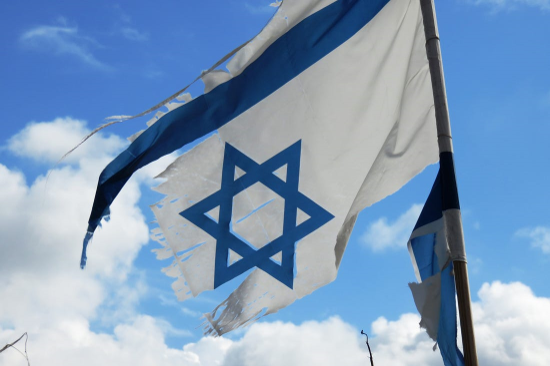
The idea that Zionism is compatible with democracy, or even basic humanity, is absurd, as the events of the past three years have proved, writes the British-Israeli author and historian Avi Shlaim.
| 17 Sept 2026 |
The war in Gaza unleashed by the 7 Oct Hamas attack on Israel is ongoing, but it has already spawned a large number of books, covering the conflict from many different angles. One book that has deservedly received considerable critical acclaim on both sides of the Atlantic is Omer Bartov’s Israel: What Went Wrong?
Bartov, who is from a liberal Zionist family and is now a professor of Holocaust and genocide studies, seeks to explain how Israel, once a beacon of hope for a persecuted minority, became a genocidal state and an international pariah. In his account, things began to go wrong from the start: Israel’s founding fathers never settled how a state which is home to multiple ethnic groups could remain at once Jewish and democratic – they left unresolved the tension between ethno-nationalism and pluralism.
A written constitution, with a bill of rights that enshrined the rights and freedoms of all individuals, could have set the new country on a different course, he argues: “the creeping racism of Israeli society might have been tempered, and the astonishing indifference to the genocide being perpetrated in Gaza and the daily crimes and pogroms on the West Bank might have elicited a greater sense of scandal”. In short, the Israeli state’s moral and political degeneration could have been averted.
We can never know, of course. But there is good reason to doubt it.
As a matter of fact, a written document did define the character of the newly born state. The Declaration of Independence, signed by the Zionist founding fathers on 15 May, 1948, promised to uphold “the full social and political equality of all its citizens without distinction of race, creed or sex”.
This promise was never fulfilled. It was just one of many examples of the huge gap between the liberal Zionist rhetoric on universal values and the discriminatory, racist reality, a gap that was filled by Israel’s leaders with hypocrisy and humbug. One of the very few things that can be said in favour of the present, far-right Israeli Government is that it has dispensed with the liberal rhetoric and exposed the ugly reality of contemporary Israeli society for all to see.
Under Labour leaders, when it came to the Palestinians, we got used to the iron fist behind the velvet glove. Under Likud and its religious Zionist coalition partners there is blatant discrimination against the country’s nearly 2m Palestinian citizens and a naked iron fist in dealing with the well over 5m Palestinians in the occupied territories.
A settler colonial state bent on eliminating the natives
Bartov does not go back far enough in history to explore the deep roots of Israeli racism. Zionism is a self-avowed settler-colonial movement, and its principal political progeny – the State of Israel – is a settler-colonial state. The logic of settler-colonialism is the elimination of the natives in order to take over the land and its resources. Ethnic cleansing is the means by which this goal is achieved.
In 1948, Israel carried out the ethnic cleansing of Palestine: 750,000 Palestinians became refugees, and the name Palestine was wiped off the map. This is what Palestinians call the Nakba, meaning “catastrophe”. The Nakba is not a single event but an ongoing process. In the June 1967 War, Israel captured the West Bank and set in motion another wave of 250,000 refugees who were not allowed to return to their homes.
‘War provides a convenient opportunity for ethnic cleansing. For Benjamin Netanyahu, this was a firmly held belief and an aspiration. For decades Netanyahu believed that a major war could provide Israel with cover to carry out a mass expulsion of Palestinians from the West Bank. In 1977 he explained this precise idea to the British historian Max Hastings. “In the next war”, Netanyahu boasted, “If we do it right, we’ll have a chance to get all the Arabs out … We can clear the West Bank, sort out Jerusalem.”
The Hamas attack of 7 Oct 2023 was seized upon by Netanyahu as the long-awaited opportunity to carry out the mass expulsion of Palestinians from the occupied territories. It has been reported that he was personally alerted by the President of the United Arab Emirates that Hamas was planning a large-scale offensive against Israel but he did not act on the warning.
According to a report published by Haaretz, the UAE Emir, Mohamed bin Zayed, called Netanyahu a week and a half before it happened and warned him that the militants were preparing “a terrifying operation”, which he described as “an earthquake”. He also expressed his concern that the operation would destabilise the whole region.
For Israel’s military, 7 Oct opened up new options
According to the report, Netanyahu received multiple other warnings, and he ignored all of them. Netanyahu has denied these claims and has threatened to sue Haaretz for defamation; his office said, “No warning was given to the Prime Minister from the United Arab Emirates before 7 Oct.” One thing is certain: the Hamas attack was horrific enough, but Israeli propaganda greatly exaggerated the scale of the atrocities, and unverified stories like the one of 40 decapitated babies were circulated in order to justify the ferocity of the counterattack.
For the Israeli public, the Hamas attack came as the most terrible shock and a national trauma, but for the military planners it opened up new options. In a leaked document, dated 13 Oct 2023, the Israeli Ministry of Intelligence outlined a plan for the transfer of the entire population of the Gaza Strip to Egypt’s Sinai Peninsula.
Egyptian opposition stymied this plan. Israel then escalated the war on the people of Gaza by moving from mass expulsion to genocide. The IDF killed over 73,000 people, a third of them children, destroyed over 80 per cent of the houses and civilian infrastructure, inflicted heavy damage on the health facilities and the educational system, and succeeded in making Gaza uninhabitable.
In the West Bank, the violent right-wing settlers intensified the campaign of ethnic cleansing with the encouragement of the government and the protection of the army.
In the past three years, Israel has committed a series of war crimes and crimes against humanity, including the crime of all crimes – genocide. This is the first live-streamed genocide in history. As a result of these atrocities, Israel’s international reputation has been damaged beyond repair.
The Zionist edifice begins to crumble
Some commentators, notably the UK-based historian Ilan Pappé, see this as the beginning of the end of Israel as we know it. To be sure, the state of Israel is not going to collapse any time soon, nor are we likely to witness regime change. The real question is whether the liberal Zionist project is likely to survive in the foreseeable future. My own view is that it is already unravelling as a result of two sets of pressure, one internal and one external.
Internally, Israel is beset by profound social, political and religious cleavages. The main issue that divided the nation before the Hamas attack was the Israel Government’s plan for judicial reform. This was widely seen as an attempt to limit the powers of the Supreme Court and free the executive to pursue its anti-liberal and racist policies at home and the formal annexation of the West Bank.
This move provoked massive and sustained protest from progressive Israelis. The protest, however, was largely confined to protecting the democratic rights of Jews, not of Arabs. Within the Jewish community, there is a cleavage between the religious Jews who prioritise the state’s Jewish character over democracy, and the secular Jews who are committed to preserving democratic values, at least for its Jewish citizens.
The much deeper divide, however, is between the country’s Jewish and Arab communities. The Hamas attack has brought in its wake a massive backlash against the Arab community inside Israel. In short, the cracks in the foundations of the Zionist edifice are very wide and beyond repair.
Israel has all but exhausted its reservoir of international sympathy
Yet, the Zionist edifice is much more likely to crumble as a result of external pressure than internal ruction. No other country in the annals of human history has received more international sympathy and support than the state of Israel after its birth. This support was partly because of Western guilt feelings about the Holocaust and partly because of the perception of Israel as an island of democracy in a sea of authoritarianism.
With its growing racism and aggressive policies in the West Bank and the Gaza Strip, Israel has all but exhausted this rich reservoir of international sympathy. The arrest warrant for war crimes issued by the International Criminal Court against Benjamin Netanyahu is just one example of this trend.
In the West, at least since June 1967, public opinion has been much more critical of Israel than their governments. Israeli behaviour since 7 Oct 2023 caused a further shift in public opinion against Israel and in favour of its victims. Slowly but surely, European governments began to follow their publics, reducing the gap between foreign policy and public sentiment. One manifestation of this trend was the growing number of European governments who recognised Palestine as a state – to Israel’s intense annoyance.
A year after recognition: The weight of our history remains.
In Britain, under the leadership of Sir Keir Starmer, the British Government remained firmly pro-Israeli despite the marches and the mass protests. His Government continued to supply arms and to provide military, logistical and intelligence support even as the Israel Defence Forces were committing war crimes in Gaza.
This almost blind support for Israel was abruptly reversed when Andy Burnham replaced Starmer as British Prime Minister. His Foreign Secretary, Ed Miliband, who is himself Jewish, delivered the starkest condemnation of the state of Israel since its foundation, charging it with inhumanity in Gaza and ethnic cleansing on the West Bank. He also announced sweeping sanctions on trade with illegal Israeli settlements and a new ban for arms licences and other exports that “materially contribute to the occupation”.
The writing is on the wall—Israel is beginning to be called to account
His speech amounted to a reset of British policy towards Israel, one that not only condemned but took action. Britain led the way. Eleven other nations, including France and Canada, announced that they too would impose sanctions.
So the writing is on the wall. Israel is beginning to be called to account for its flagrant violations of international humanitarian law.
By its own actions, Israel has turned itself into an international pariah. Israel is now beginning to pay the price for being an apartheid state, a Jewish supremacist state, an occupier, an oppressor and, worst of all, the perpetrator of genocide.
Liberal Zionism is dead. Liberal Zionism posits that Zionism is compatible with democracy. If the events of the past three years have proved anything, it is that Zionism is incompatible with democracy or even elementary humanity. The moral and political degeneration of the State of Israel is not the result of an absence of a written constitution. It is the delayed but inevitable product of settler-colonialism.
There is an Arabic saying: Something that starts crooked, remains crooked.
Avi Shlaim is an emeritus professor of international relations at the University of Oxford and the author of Three Worlds: Memoirs of an Arab-Jew and Genocide in Gaza: Israel’s Long War on Palestine.