

The British Government’s current position on Israel and Palestine: Living conditions in Gaza

Question by Baroness Sheehan (Lib Dem) on 21st May 2021 (HL535) To ask Her Majesty’s Government what assessment they have made of the impact of reductions in the Overseas Development Assistance Budget on donations to organisations bringing humanitarian aid to Gaza. Answer from Lord Ahmad (Conservative) on 8th June 2021 Allocation decisions have been taken…

Details
The British Government’s current position on Israel and Palestine: Archaeology

Question from Baroness Tonge (Independent) on 6th August 2020 (HL7405) To ask Her Majesty’s Government what assessment they have made of the case for providing protection for archaeological artefacts in Palestine to ensure that any such artefacts remain under Palestinian ownership. Answer from Baroness Sugg (Conservative) on 6th August 2020 The UK acknowledges the importance…

Details

British Government’s Current Position: Education of Israeli & Palestinian children

Question by Caroline Ansell (Conservative) on 24th May 2022 (UIN8084) To ask the Secretary of State for Foreign, Commonwealth and Development Affairs, what recent discussions she has had with representatives of the Palestinian Authority (PA) on the removal of material reportedly inciting violence and antisemitism and the inclusion of material promoting peace in the PA…

Details

British Government’s Current Position: Trade with Israel

Business and Trade – Oral Questions to the Parliamentary Under-Secretary of Business and Trade:– Kate Osamor: I understand that the Government are set to undertake a second round of trade negotiations with Israel in the spring. Israel applies our current agreement to the Occupied Palestinian Territories, against the EU negotiator’s original intentions. Have the Government…

Details

British Government’s Current Position: Freedom of worship in Israel, Jerusalem & the West Bank

Question by the Bishop of Southwark on 9th January 2023 (HL4594) To ask His Majesty’s Government what representation they have made to the government of Israel to safeguard and protect religious minorities in that country following the desecration of graves at the Protestant Cemetery on Mount Zion, Jerusalem. Answer from Lord Ahmad on 26th January…

Details

British Government’s Current Position: Israel’s Nation State Law and other internal Israeli legislation

Question from Baroness Janke (Lib Dem) on 1st February 2023 (HL5318) To ask His Majesty’s Government what discussions they have had with the government of Israel regarding (1) the right of Palestinians living in Israel (a) to hold Israeli citizenship, and (b) to vote in Israeli elections, and (2) statements by the Minister for Internal…

Details

British Government’s Current Position:The treatment of Palestinians during Israeli arrests and Palestinian prisoners in Israeli jails

Question by Baroness Sheehan (Lib Dem) on 10th January 2022 (HL5266) To ask Her Majesty’s Government what representations they have made to the government of Israel concerning the treatment of Palestinians and their property during night raids by Israeli forces. Answer from Lord Ahmad (Conservative) on 24th January 2022 While we recognise Israel’s legitimate need…

Details

British Government’s Current Position: Restrictions of movement in the West Bank

Question: by Baroness Tonge (Independent) on 10 June 2019 Foreign and Commonwealth Office, Hebron, (HL16231) To ask Her Majesty’s Government what assessment they have made of the consequences for Palestinian children in Hebron of the removal of the Temporary International Presence in Hebron by the government of Israel. Answer:  by: Lord Ahmad of Wimbledon (Conservative) on 24…

Details

British Government’s Current Position: Settler and Israeli army violence towards Palestinians

Question from Seema Malhotra (Labour) on 8th February 2023 To ask the Secretary of State for Foreign, Commonwealth and Development Affairs, what assessment he has made of the situation in Jenin. Answer by David Rutley (Conservative) on 20th February 2023 The Minister for the Middle East, Lord (Tariq) Ahmad of Wimbledon, set out on 26…

Details

British Government’s Current Position: Israeli settlement building and demolitions

Question by Wera Hobhouse (Lib Dem) on 18th January 2023 (UIN 126759) To ask the Secretary of State for Foreign, Commonwealth and Development Affairs, whether he has made representations to the Israeli Government over settlement expansion and demolitions of Palestinian homes and other buildings. Answer from David Rutley (Conservative) on 26th January 2023 The UK…

Details

British Government’s Current Position: Prioritising peace and cooperation in the Middle East in the midst of COVID-19

Question by Baroness Janke (Lib Dem) on 1st February 2022 (HL5843) To ask Her Majesty’s Government what support they intend to offer, if any, to the COVID-19 vaccination programme for Palestinians in Gaza, given reports of shortages of medical equipment. Answer from Lord Ahmed (Conservative) on 14th February 2022 Tackling COVID-19 remains a priority for…

Details

Evaluating the Balfour Declaration: Breaking the Deadlock in the Middle East

On Saturday May 18th 2013, the Balfour Project held a one day conference at The Stripe, University of Winchester exploring the different legacies of the Balfour Declaration and how a greater understanding of history can contribute to justice and peace in the Middle East today. Speakers included,  Professor Mary Grey, Rabbi Professor Dan Cohn-Sherbok, Dr…

Details

Parallel Histories videos

Parallel Histories have developed a series of videos for teaching disputed history starting with the Israeli-Palestinian conflict. They have produced a film  ‘Should the British government be praised or blamed for the Balfour Declaration?’.  Do watch it. They also have many other videos covering the history of Israel Palestine

Details

The Forgotten History of the Jewish, Anti-Zionist Left

An interview with Banjamin Balthaser, published on Jacobin The roots of modern Zionism are in colonialism. This was the foundation of the Jewish left’s opposition to Zionism in the 1930s and ’40s, on the grounds that it is a form of right-wing nationalism and imperialism that is fundamentally opposed to working-class internationalism. Israeli Prime Minister…

Details
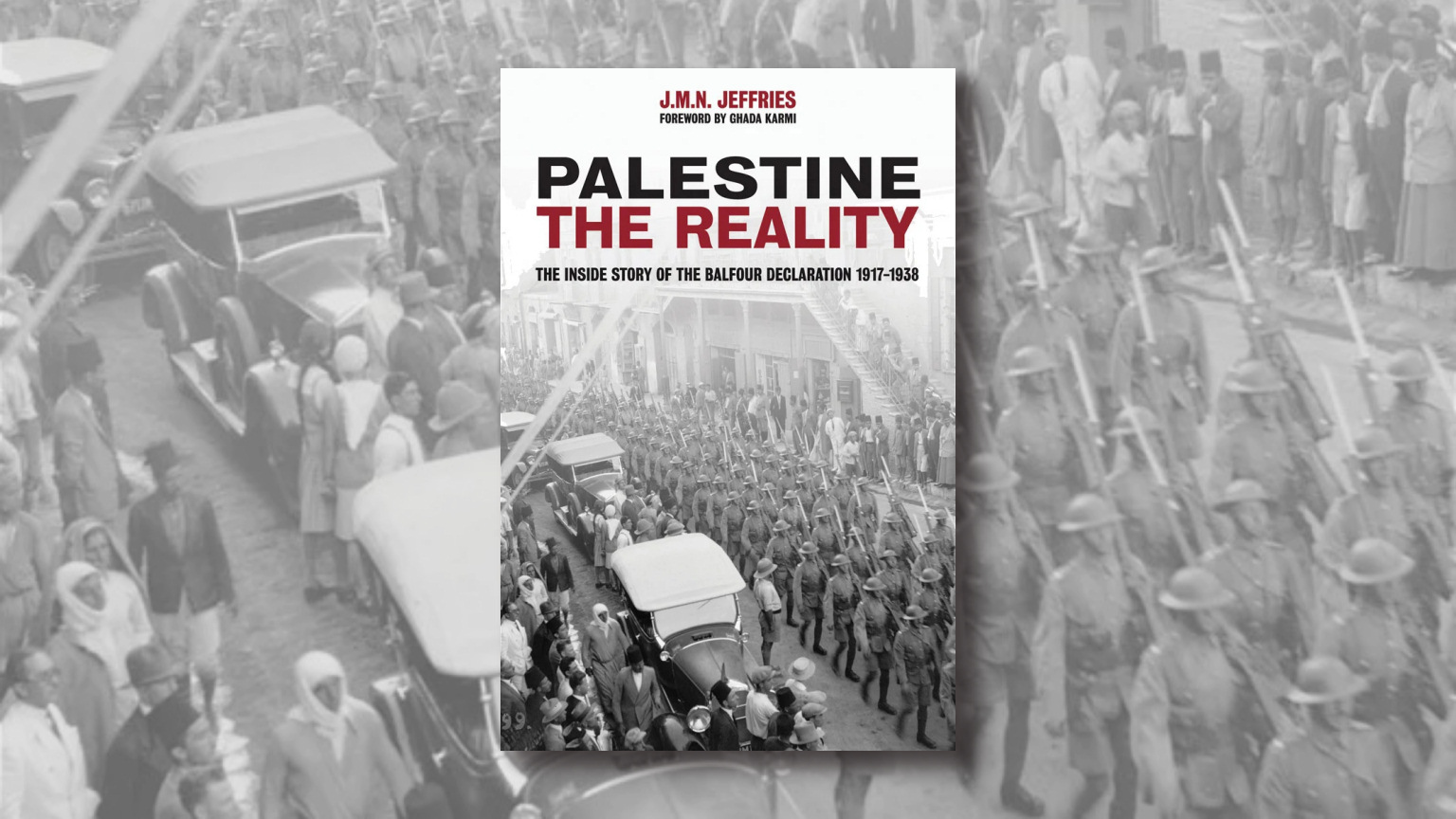
Palestine the Reality cover image on a landscape background featuring part of the book's cover photo

The best book on the Balfour Declaration is…

Palestine: The RealityThe inside story of the Balfour Declaration 1917–1938 by J.M.N. Jeffries Published: 1939, reissued 2017 Formats: Hardback, paperback ISBN: 9781911072126 £26.99 First published by Longman Green and Co. Reissued by Olive Branch Press and Skyscraper Publications. Paperback £26.99 By John McHugo    Many people trying to get to grips with the Israel/Palestine conflict…

Details

Over 40 British rabbis write to the UK Israeli embassy opposing annexation

By Alleks Phillips, first published in The Jewish Chronicle, 9 July 2020 Over 40 British rabbis – including former Liberal senior rabbi Danny Rich and outgoing Reform senior rabbi Laura Janner-Klausner – have written to the Israeli embassy in London opposing the government’s annexation policy. Addressing chargé d’affaires Sharon Bar-li, who is Israel’s senior diplomat…

Details

Andrew Whitley on The UN, Britain and Palestine/Israel – 1947 to Present Day

A talk given online in June 2020. Andrew Whitley: My thanks to so many of you for taking the trouble today to attend this online talk from the Balfour Project, I hope you will find it stimulating and thought-provoking. It may be a little confusing at times because we’re going to be jumping between Palestine…

Details

Joint letter by 1,080 parliamentarians from 25 European countries to European governments and leaders against Israeli annexation of West Bank

23 June 2020 We, parliamentarians from across Europe committed to a rules-based global order, share serious concerns about President Trump’s plan for the Israeli-Palestinian conflict and the imminent prospect of Israeli annexation of West Bank territory. We are deeply worried about the precedent this would set for international relations at large. For decades, Europe has…

Details

By recognising Palestine, Britain can help right the wrongs of the Balfour declaration

By Avi Shlaim This is the full text of a truncated version of Avi Shlaim’s article in The Guardian. The Guardian had edited out the references to Winston Churchill and the Israeli Policy Working Group. The wave of anti-racist protest sweeping through the country has prompted a re-examination of colonial legacies and responsibilities. Britain’s theft…

Details

Church leaders across the globe express deep concern over Israeli plan to annex parts of West Bank

By World Council of Churches, 17 June 2020 Church leaders from across the world are expressing their grave concern over the government of Israel’s plan to annex parts of the occupied West Bank. Archbishop Justin Welby and Cardinal Vincent Nichols of Westminster published a “Joint Statement on Annexation” on 12 June, delivered to both the…

Details

Nakba: The forgotten 19th century origins of the Palestinian catastrophe

By Joseph Massad in Middle East Eye The Nakba, Palestinians’ loss of their lands and homes, arguably began in the 1880s with the arrival of the first Zionist Jewish colonists, who evicted Palestinians from land the colonists had purchased from absentee landlords. The Nakba is an ongoing calamity that continues to define the Palestinian condition…

Details

We Cannot Justify Israel’s West Bank Annexation – by 40 signatories in Haaretz

In an unprecedented letter to Israel’s UK ambassador, prominent British Jews warn that annexation ‘poses an existential threat to the traditions of Zionism in Britain, and to Israel as we know it’ The following letter was sent by leading members of the UK Jewish community to Israel’s Ambassador to the Court of St James’s, Mark…

Details

Boris Johnson has to stand up to Netanyahu’s annexation plans – for the sake of the Palestinians and peace – by Donald Macintyre

Published in the Independent 30 May 2020 Whatever Boris Johnson’s troubles, he can always comfort himself that unlike the prime minister of a British ally 3,000 miles away, he’s not running the country while simultaneously being tried on corruption charges. But a difference between Johnson and Israel’s Benjamin Netanyahu is the latter’s political nous, most recently deployed in…

Details