
Sir Harold Nicholson and the Balfour Declaration

From Nick St Aubyn Dunsfold, Surrey Daily Telegraph 13th Oct 2014 SIR – In 1917 my great-uncle, Sir Harold Nicolson, was a private secretary to the foreign secretary at the time of his Balfour Declaration. Nicolson, who was involved in crafting every word of the declaration, later wrote: “We never promised a Jewish State. All…

Read more

Perfidious Albion: Britain’s broken promises: the Balfour Declaration (1917) and its impact on the Israeli/Palestinian conflict: what are our responsibilities today?

This lecture was given by Professor Mary Grey in the URC Church, Crondall, Northumberland for their Peace and Reconciliation centre, 5th September 2014 Here in Northumberland, it is impossible to forget the bloodshed of the Battle of Flodden in 1513, not to mention centuries of border raids, preceded by Viking invasions and so on. In…

Read more

French support for the Zionist cause

 On the 4th June 1917 Jules Cambon,  wrote to Nahum Sokolow expressing French support for his project which aimed for ‘Jewish Colonisation in Palestine’. This preceded war cabinet discussions in London which did not start until July 1917.      The Secretary General of Foreign Affairs to Mr Sokolof Paris 4th June 1917 You were…

Read more

Contradictory Promises, by Peter A Shambrook

The seeds of 100 years of conflict Britain, the Arabs and the Jews, 1914 – 1918 2014 – 2018: Britain’s opportunity to acknowledge. In 2014, the centenary of the Great War will be marked in a variety of ways right across the globe. Every country involved will remember and honour those millions who made the…

Read more

“Are we trapped by our own narratives?” by Tony Klug

Tony Klug, speaking at the Balfour Project conference in October 2013 spoke stirringly to the question “Are we trapped by our own narratives?” He began by demonstrating that everyone becomes a player in this seemingly intractable conflict, where what passes for objective analysis masks partisan agenda. He urged empathetic understanding of key protagonists on both…

Read more

Yitzhak Epstein: The Hidden Question

In 1907 Yitzhak Epstein, a Russian-born teacher who had settled in Palestine, published an article entitled “The Hidden Question” in the Hebrew periodical Ha-Shiloah. Its subject was the attitude of the Jews toward the Arabs of Palestine. “Among the grave questions raised by the concept of our people’s renaissance on its own soil,” wrote Epstein,…

Read more

Britain’s legacy to the tortured Ottoman Empire

Selfish imperial agreements between Britain and France, combined with the publication of the contradictory Balfour Declaration of 1917, fuelled hostilities in the Middle East This article appeared in The Sunday Telegraph on 2 February 2014 By Patrick Bishop The First World War was the most modern of conflicts. Yet the thinking of the men who…

Read more

Contradictory Promises

See also Contradictory Promises by Dr Peter Shambrook where these promises are explored in more detail. 1915  The McMahon-Hussein Correspondence, • In 1915 Britain promised the Arabs that after the war they would be granted independence in their lands, in exchange for joining a wartime alliance against the Turks. 1917 The Balfour Declaration, • This…

Read more

Powerful symbols and the British-Zionist alliance: approaching the centenary of the Balfour Declaration by Nur Masalha

  Masalha writes that as the centenary of the Balfour Declaration approaches it is timely for a reassessment of the impact of the statement and British policies towards Palestine and its indigenous people. The Declaration is commonly attributed incorrectly to military needs such as protection of the Suez Canal, getting America into the war etc.…

Read more

Balfour and Palestine, a legacy of deceit, by Anthony Nutting

Anthony Nutting resigned  from Anthony Eden’s government when he found Eden was going into Suez. Writing around 1975, he reflects on Doreen Ingram’s book “The Palestine Papers: 1917-1922: Seeds of Conflict”. The papers in this book made clear that during and after the First World War British Government ministers and officials had intentionally rather than…

Read more

Biography: Arthur Balfour by Brian Klug

From Brian Klug, Being Jewish and Doing Justice: Bringing Argument to Life London: Vallentine Mitchell, 2011, pp. 199-210 There appears to be a conundrum about Arthur Balfour.1 On the one hand, his name is inseparable from the Declaration he signed as Foreign Secretary on 2 November 1917, which read in part: ‘His Majesty’s Government view…

Read more

Article 22 of the Covenant of the League of Nations

In 1922 (Ratified in 1923) Britain acquired from the League of Nations the Mandate to administer Palestine, which required her to implement the Balfour Declaration, and undertake a “sacred trust of civilisation” to advance the welfare of the Palestinian people and guide them to independence. ARTICLE 22 To those colonies and territories which as a…

Read more

The Palestine Mandate July 1922

The Mandate, the full details of which are available in the Avalon Project, incorporated the provisions of the Balfour Declaration. Whereas the Principal Allied Powers have also agreed that the Mandatory should be responsible for putting into effect the declaration originally made on November 2nd, 1917, by the Government of His Britannic Majesty, and adopted…

Read more

British White Paper of June 1922

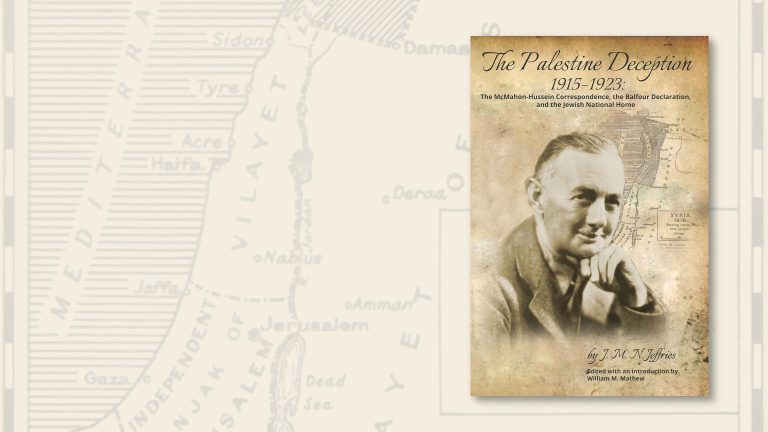
Below is the White Paper but also read: Rescuing Balfour: Winston Churchill at the Colonial Office   1921-22  Dr William Mathew shows in this essay how Winston Churchill,.. played a vital role in securing the British government`s long-term commitment to the terms of the Balfour Declaration of November 1917. Joseph Jeffries and the ‘Palestine Deception’, 1923…

Read more

British White Paper of 1939

In the statement on Palestine, issued on 9 November, 1938, His Majesty’s Government announced their intention to invite representatives of the Arabs of Palestine, of certain neighbouring countries and of the Jewish Agency to confer with them in London regarding future policy. It was their sincere hope that, as a result of full, free and…

Read more

The Sykes-Picot Agreement 1916

With the Ottoman Empire drawn into the war the Entente powers assumed that its defeat and dismemberment were inevitable. They negotiated between themselves which portions of the Empire they would take. In 1915 Prime Minister Herbert Asquith appointed the de Bunsen Committee to identify the Ottoman territories that were of interest to Britain. They considered…

Read more